When space is limited—especially in hotels, dormitories, hostels, or compact apartments—vertical sleeping solutions become a smart design choice. Two of the most popular options are bunk beds and loft beds. While they may look similar at first glance, they serve different purposes and are built for different needs.
Understanding the difference helps you choose the right solution for comfort, safety, and space efficiency.
What Is a Bunk Bed?
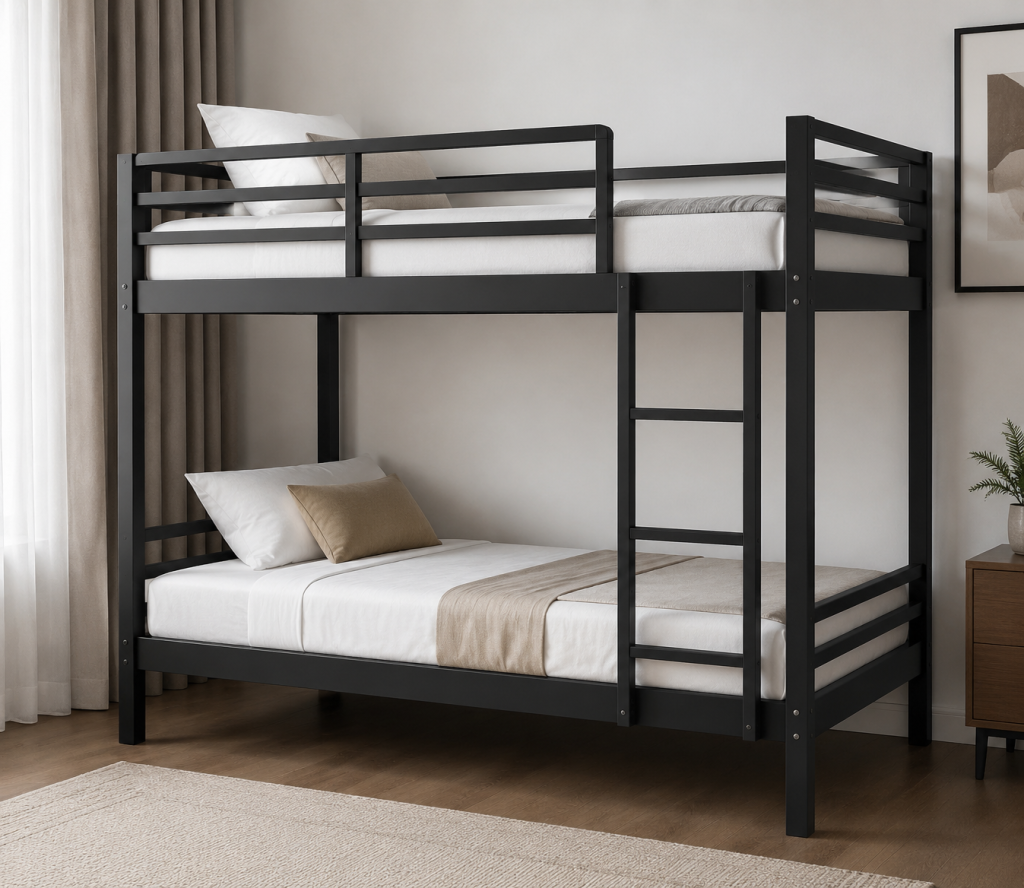
A bunk bed consists of two stacked sleeping surfaces, one directly above the other. Both the top and bottom bunks are designed for sleeping.
Key Features of Bunk Beds:
- Two sleeping spaces in one frame
- Ladder or stairs for upper bunk access
- Guardrails on the top bunk for safety
- Often used in shared bedrooms or dorm-style accommodations
Best For:
- Children’s shared rooms
- Hostels and budget hotels
- Vacation cabins
- High-occupancy guest rooms
Bunk beds are ideal when you need to maximize sleeping capacity without increasing floor space.
What Is a Loft Bed?
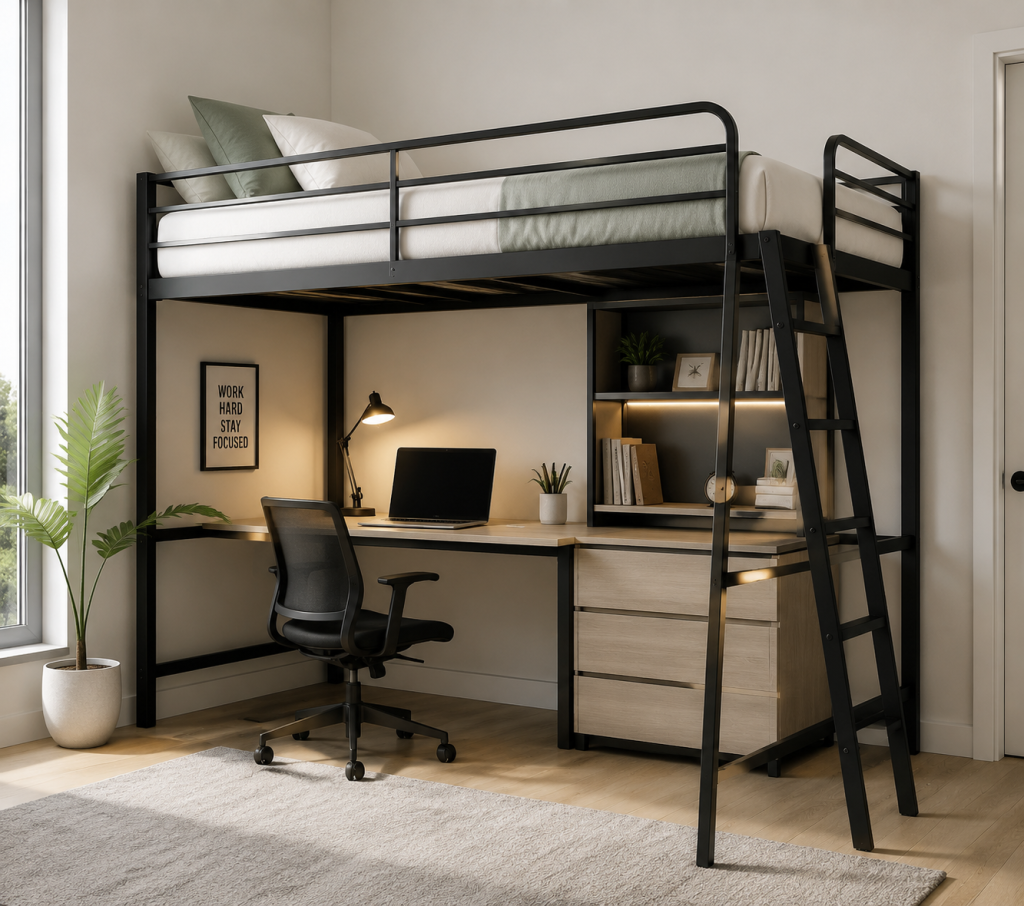
A loft bed is a raised bed with open space underneath. Unlike bunk beds, there is no second sleeping area below.
Instead, the lower space is used for:
- A desk or study area
- Storage cabinets or shelves
- Seating or lounge space
- Open floor area for flexibility
Key Features of Loft Beds:
- Single elevated bed
- Fully usable space underneath
- Compact footprint for multifunctional rooms
- Often used in modern, space-saving interior design
Best For:
- Studio apartments
- Student housing
- Small bedrooms
- Hotel rooms with workspace needs
Loft beds are designed to improve functionality rather than increase sleeping capacity.
Bunk Bed vs. Loft Bed: Key Differences
1. Sleeping Capacity
- Bunk Bed: Two people can sleep
- Loft Bed: Only one sleeping space
2. Space Usage
- Bunk Bed: Prioritizes sleeping efficiency
- Loft Bed: Prioritizes multifunctional floor space
3. Function Below the Bed
- Bunk Bed: Another bed
- Loft Bed: Desk, storage, seating, or open area
4. Ideal Use Case
- Bunk Bed: Shared rooms and group accommodation
- Loft Bed: Small private rooms needing work/living zones
Which One Should You Choose?
The decision depends on how the room will be used:
- Choose a bunk bed if your priority is maximizing occupancy in a shared space.
- Choose a loft bed if you want to optimize space for living, studying, or storage while keeping a single sleeping area.
For hotels or hospitality projects, bunk beds are often used in family rooms or group accommodations, while loft beds are popular in modern compact hotel designs that include workstations or lounge areas.
Custom Hospitality Furniture Solutions
For hotels, apartments, dormitories, and large-scale projects, customization plays an important role—especially in dimensions, materials, finishes, and safety standards.
Assomsen Furniture is a China-based factory specializing in custom hotel and apartment furniture. We provide cost-effective manufacturing solutions tailored to different project requirements, including bunk beds, loft beds, wardrobes, and full room sets.
For inquiries or custom projects, please contact: assomsenhotelfurniture@gmail.com